Most private home elevators are not required to include Fire Service Control (Phase I and Phase II) as found on commercial passenger elevators. Residential elevators are typically installed under ASME A17.1 / CSA B44, Section 5.3, which governs private residence elevators and reflects their use within single-family homes. Fire service operation is designed specifically for firefighter use in public and commercial buildings, and fire departments generally do not rely on residential elevators during emergency response. As a result, features such as firefighter key switches, automatic recall to a designated landing, and in-car firefighter controls are usually not required for private home elevator installations.
While full Fire Service Control is generally not required for private residence elevators, local jurisdictions may still impose limited fire-related requirements. These often include smoke detection at the top of the hoistway or within the machine space, as well as automatic elevator shutdown when smoke is detected. These measures are intended to prevent elevator operation during a fire event rather than to support firefighter use, and they should not be confused with full Phase I or Phase II fire service operation.
It is also important to distinguish private residence elevators from other elevator types that may appear similar but fall under different code classifications. Elevators serving multi-family buildings, common areas, or publicly accessible spaces are typically classified as commercial passenger elevators and are subject to more stringent fire service requirements. Likewise, Limited Use / Limited Application or LULA elevators and Vertical Platform Lifts (VPLs) may be governed by different sections of the elevator code and, depending on jurisdiction, may require fire recall or integration with the building fire alarm system.
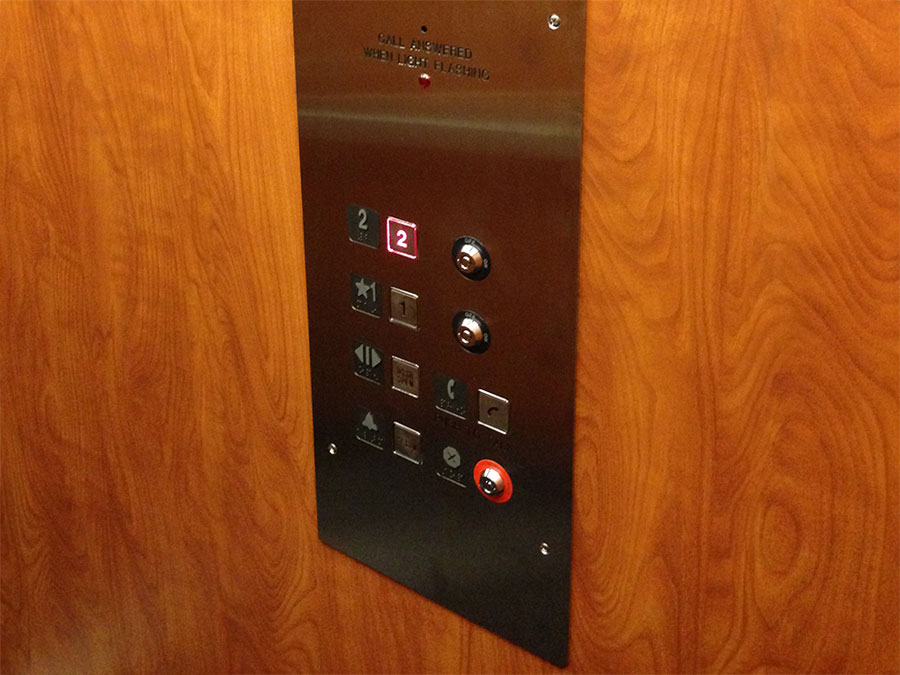
For architects and designers, proper classification early in the planning process is critical. How the elevator is labeled on permit drawings—private residence elevator versus commercial or accessibility equipment can directly affect fire service requirements, electrical scope, and fire alarm coordination. Misclassification can lead to redesigns, inspection delays, or unexpected code compliance issues later in the project.
Because fire service requirements for residential elevators can vary by state or municipality, early coordination with the local Authority Having Jurisdiction (AHJ) is strongly recommended. Local elevator contractors are also typically familiar with how these rules are applied in practice and can help confirm whether fire recall, smoke detection, or shutdown features will be required for a specific installation.
Ask a question or leave a reply.
Please register or log in to ask a question.