What Elevator Controllers Do and When They Need Repair
If you have ever been told that your home elevator has a “controller problem,” you may wonder what that means. The controller is often called the brain of the elevator because it receives commands, monitors operating conditions, and tells the equipment when to move and stop. But a controller cannot operate alone. It works with the elevator’s motor or hydraulic system, door and gate equipment, switches, sensors, and other components.
Understanding that relationship can help you ask better questions when an elevator stops working. A controller may have failed, or it may be doing exactly what it should: keeping the elevator from moving until another problem is corrected.
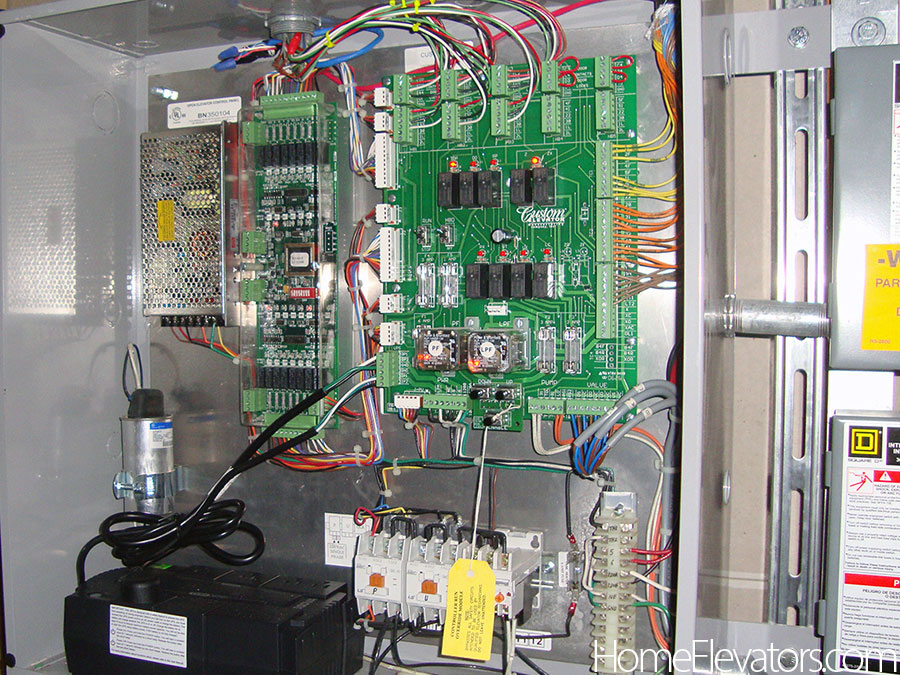
How does a home elevator controller work?
When someone presses a floor button, the controller receives the call and checks whether the elevator is ready to run. Depending on the system, it checks signals such as the position of the car, the condition of landing doors and the cab gate, and other required operating and safety devices. If the necessary conditions are met, it commands the drive equipment to move the car. It then uses position information to slow or stop the elevator at the requested landing.
The details vary by manufacturer and drive type. A hydraulic elevator uses a pump, valves, and hydraulic equipment; a traction or winding-drum elevator uses different machinery. Their controllers may look and operate differently, but each coordinates the elevator’s functions.
The buttons inside the car are called the car operating panel. They send requests to the controller; they are not the controller itself. The controller is typically housed in a separate cabinet in a machine room or equipment area, with its location depending on the elevator design.
What is inside the controller cabinet?
Depending on its age and design, a controller cabinet may contain circuit boards or a programmable control unit, relays, contactors, power supplies, terminals, and components that interface with the drive system. Modern units usually include a display or diagnostic interface. Older systems may rely more heavily on electromechanical relays.
The cabinet is only one part of the control system. Wiring connects it to the landing calls, car controls, door and gate devices, position sensors, and machinery. A fault anywhere along those connections can affect what the controller sees.
Why does a home elevator stop when a door or gate is open?
A home elevator is designed to prevent normal travel when a required door or gate condition is not satisfied. For example, an open cab gate may prevent movement, and landing door interlocks help control access to the hoistway. The controller monitors signals from these devices as part of its decision to run. Exact behavior depends on the equipment.
This is why an elevator that does not respond to a floor call does not necessarily need a new controller. A door that is not fully closed, a gate issue, a misaligned switch, or a wiring problem can produce a similar symptom. Some systems display a message that helps narrow the cause; for example, a controller can alert for open gates and hoistway doors.
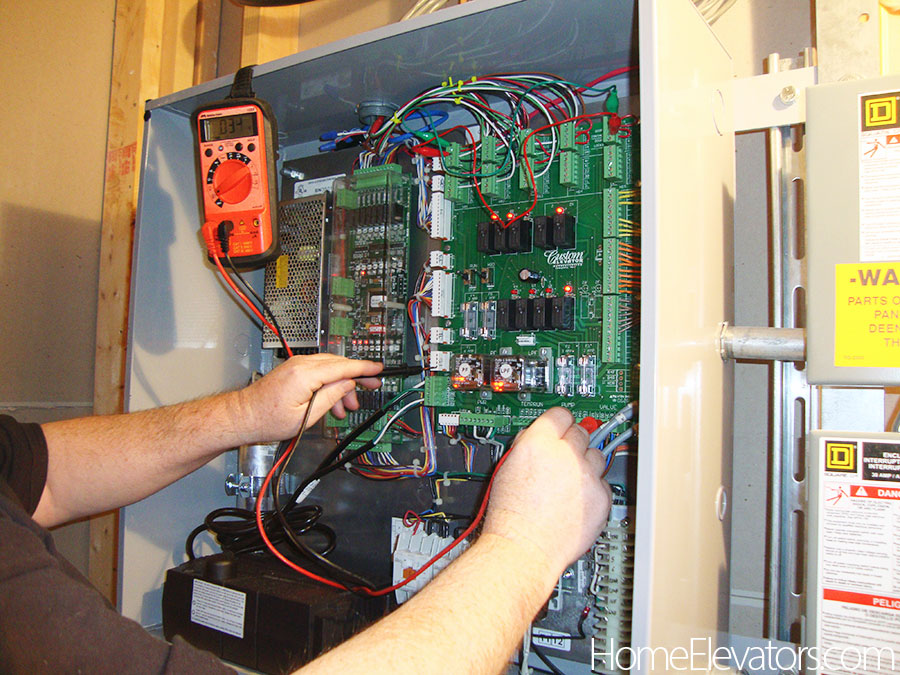
Can the controller tell a technician what is wrong?
Many controllers provide fault messages, indicator lights, or stored error codes. These clues can show which condition prevented a trip or where troubleshooting should begin. A fault code is a starting point, however. It may identify an open safety circuit without identifying the exact switch, wire, or component responsible.
If your elevator displays a message, write down the exact wording or code and tell the service company when it appeared. Also note whether the problem happens at one floor, after a power outage, or only intermittently. That information can be useful during diagnosis.
When does a controller need repair or replacement?
A qualified elevator technician should first determine whether the problem is in the controller or in equipment connected to it. A repair might involve a replaceable board, relay, power supply, connection, or other component. Availability depends on the manufacturer, model, age, and condition of the equipment.
If the original controller is obsolete, unsupported, or repeatedly unreliable, a complete controller replacement may be considered. This is often called a controller modernization. It may require changes to wiring, fixtures, sensors, or drive-related components, followed by setup, inspection, and testing as required for the installation. It is more involved than swapping a circuit board.
Replacing a controller also does not automatically mean replacing the entire elevator. The appropriate scope depends on the condition and compatibility of the remaining equipment, available parts, and applicable requirements. Updating electronics are one possible part of home elevator modernization.
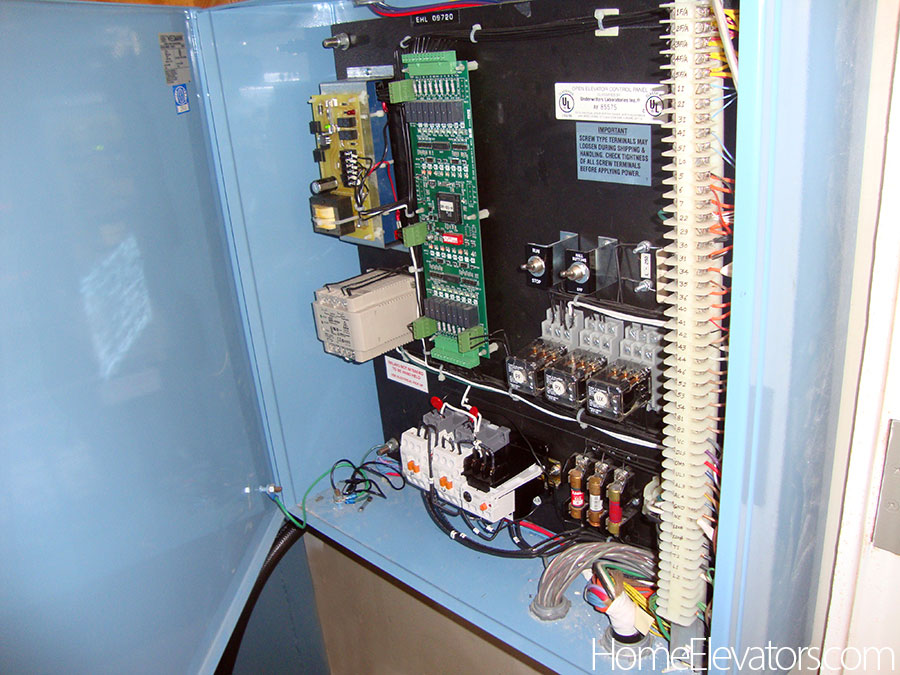
How much does it cost to replace a home elevator controller?
Controller replacement is one of the more expensive home elevator repairs. Based on our experience, replacing the controller alone typically costs on average $9,000 to $12,000. That is an approximate range for a standard 2-stop elevator, not a guaranteed quote for every elevator. Each landing, entrance and equipment options like power operated doors add additional work and increases the cost.
The total can be higher if the landing system or other components must also be replaced or updated to work with the new controller. The elevator’s make, model, age, condition, and availability of compatible parts also affect the scope of the job.
Questions to ask a service company
If a company recommends controller work, ask:
- What test or diagnostic finding points to the controller?
- Could a door, gate, switch, wiring, power, or drive problem cause the same symptom?
- Can the failed component be repaired or replaced, and are parts still available?
- If a new controller is recommended, what other equipment must be updated with it?
- Who will support the replacement controller in the future?
- What testing and inspections will be needed before the elevator returns to service?
A written proposal should identify the equipment being replaced and explain what is included. If the recommendation is to remove the entire elevator, ask why controller repair or modernization is not feasible for that particular installation.
A word about safety
You can check whether a landing door or cab gate is fully closed and report any displayed message. Follow the instructions supplied for your specific elevator. Do not open the controller cabinet, bypass a door or gate switch, or repeatedly reset an elevator that stops for an unknown reason. Electrical equipment and elevator safety circuits should be diagnosed by a qualified elevator professional. If anyone is trapped, use the elevator’s emergency communication or call emergency services as appropriate.
The bottom line
The controller coordinates a home elevator’s operation, but a stopped elevator is not automatically a failed controller. Diagnosis should establish what signal or component caused the shutdown and whether a repair, controller modernization, or broader equipment replacement is warranted. Knowing the difference can help you make a more informed decision about keeping your elevator in service.